

Solar Power Knowledge
Solar Module Factory Production Line: From Cell to EL Test in 8 Steps
 Gaotu Innovation

Summary / Article Summary
A factory’s showroom tells you nothing about whether your shipment will work. This guide walks the solar module production line in 8 steps—cell sorting, stringing, layup, lamination, trimming and framing, junction box potting, EL testing, and IV testing—and for each step tells you what to look at on the floor, what you won’t see, and the exact question to ask. It closes with Gaotu Innovation’s published line configuration as a concrete benchmark.
Quick Answers
- What are the 8 steps of solar module production?
Cell sorting and incoming inspection, stringing, layup, lamination, trimming and framing, junction box and potting, EL testing, and IV testing before shipment. Each step has a specific failure mode that shows up years later in the field. - Which production step matters most for module lifespan?
Lamination. Insufficient EVA cross-linking or incomplete vacuum draws create bubbles and delamination that surface after one to two years outdoors. Ask to hold a freshly offloaded semi-finished module up to the light and check edges and cell gaps. - What should I ask about EL testing?
Don’t ask whether they have an EL machine—most factories do. Ask whether every module goes through or only a sample, and whether images are archived. Request a few random EL images with matching serial numbers at shipment. - What is the biggest trap in a factory tour?
The line they show you isn’t necessarily the line your order runs on. Ask directly which line your order is on and whether you can see that one. A factory willing to show its production schedule is far more credible than one that only shows the showroom. - How does Gaotu Innovation’s line configuration compare?
Gaotu Innovation runs 20 automated production lines, 8 high-speed SMT lines, 28 ribbon welders, and 18 automated laminators across roughly 35,800 square meters in Dongguan, with monthly capacity of 132,500 modules and 72-hour samples. A 15,200-square-meter Indonesia plant with 10 automated lines serves as a US tariff lane.
Most people’s mental image of a “factory” stops at the showroom and the sample wall. But the things that actually determine whether your shipment works are all on the lines inside the workshop—the precision of the stringer, the vacuum level of the laminator, whether the EL tester is actually running.
This isn’t a equipment checklist. Equipment can be bought and lines can be built. What matters is whether a factory is willing to let you see the dirty parts of the process. Here’s the module journey broken into 8 steps, with what to look at and what to ask at each one.
Step 1: Cell sorting and incoming inspection
The first thing that happens to cells when they arrive isn’t going on the line. It’s binning. Mix different efficiencies and colors together, and you get modules with inflated power ratings and a patchwork look. A legitimate factory keeps sorter test data on file with bin records for every incoming batch.
What you won’t see: whether the cell cartons in the warehouse have bin and batch labels. If every box looks identical with no markings, either the sorting records live in a system while the floor management is a mess, or no real sorting happened.
What to ask: “Can you attach the binning data for the cells used in my order at shipment?”
Gaotu Innovation’s public materials state that their portable foldable lines use Tier-1 mono or SunPower Maxeon cells, selectable at order time. That choice itself signals the cell source is transparent, not whatever’s on hand.
Step 2: Stringing
Cells get connected into strings by ribbon. Ribbon misalignment, cold solder joints, or unstable soldering temperature all turn into broken fingers or hot spots years later.
What to look at: whether anyone is watching the stringer. Even fully automated lines need pull-test sampling. If you can’t spot a single QC station along the line, either automation is high enough to not need people (a handful of large factories can claim this) or quality control is luck.
What to ask: “How often do you run solder pull tests? Can I see the records?”
Step 3: Layup
Strung cells get placed on glass, encapsulant and backsheet go on top. Looks simple, but string spacing, encapsulant cutting dimensions, backsheet orientation—any detail wrong and the laminate comes out as scrap.
What to look at: the lighting at the layup station. In a dim workshop, workers can’t spot subtle color variation or misalignment between cells. Legitimate lines install dedicated lighting above layup.
Step 4: Lamination
This is the one step on the line where there’s no room to compromise. Insufficient EVA cross-linking or incomplete vacuum draws lead to bubbles and delamination that show up after a year or two in the field. The time-temperature-pressure curve is the core parameter, but factories usually won’t show you the curve.
What to look at: have someone on the line grab a freshly offloaded semi-finished module and hold it up to the light, checking edges and gaps between cells. Bubbles, wrinkles, or unmelted encapsulant granules mean that laminator’s parameters or maintenance have a problem.
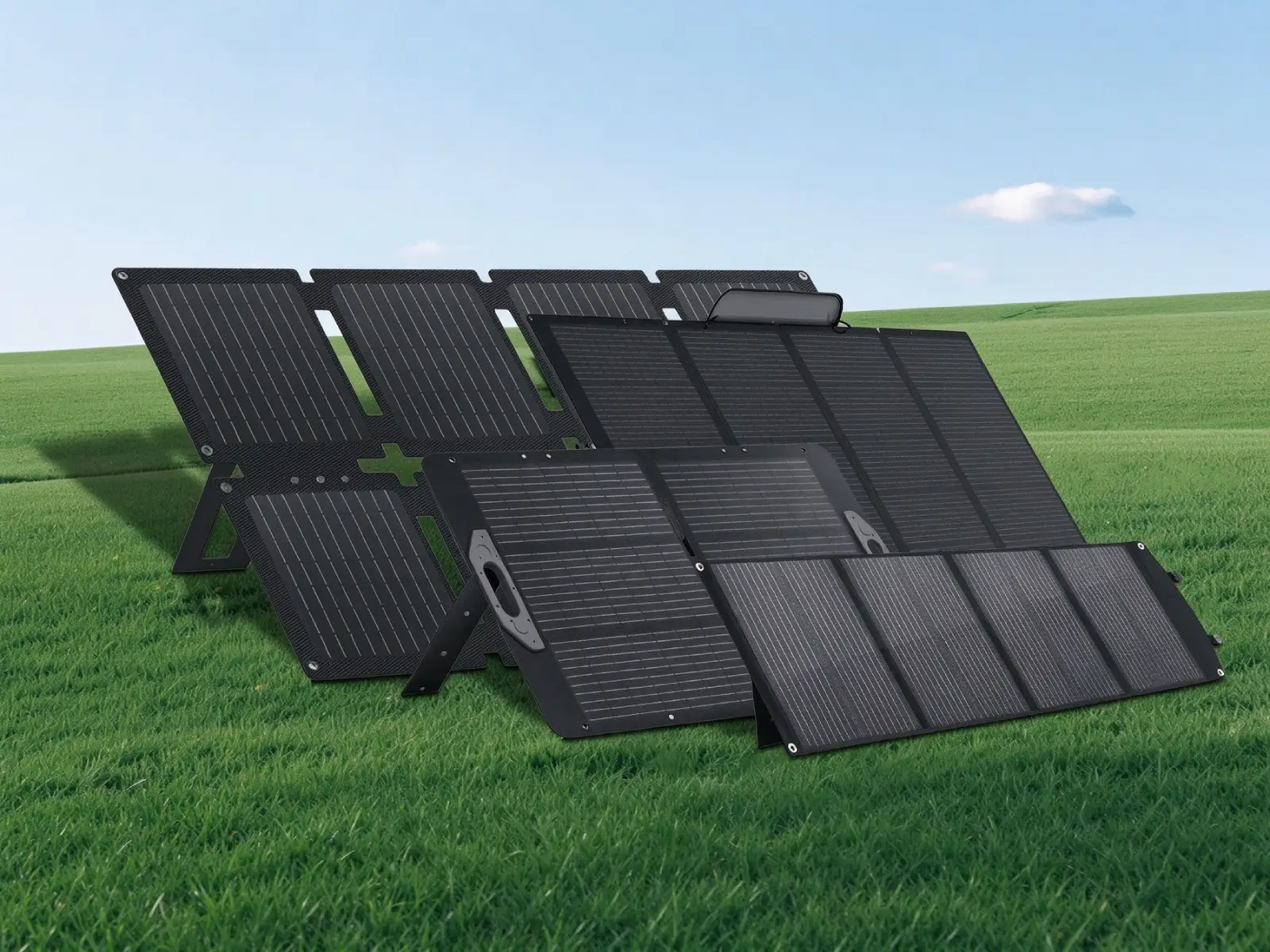
Gaotu’s description of their foldable line specifically mentions temperature-controlled laminators ensuring “zero air bubbles,” aimed at preventing delamination—which they call the number one cause of portable panel failure. At least they know what to focus on.
Step 5: Trimming and framing (rigid modules)
Glass modules get trimmed, framed in aluminum, and sealed with silicone after lamination. Portable foldable panels have no frame, but edge sealing and fabric wrapping are just as critical.
What to look at: silicone quality at the corners. Is the bead continuous, bubble-free, and not smeared onto the front glass? The difference between hand-applied and automated silicone shows up most clearly at corners.
Step 6: Junction box and potting
The junction box is the module’s exit, and the bypass diode lives inside. Incomplete potting or a cold-soldered junction box connection directly raises hot-spot risk.
What to ask: “How do you check potting fill? Sample or 100%?”
Step 7: EL testing
EL imaging catches micro-cracks and broken fingers invisible to the naked eye. The question isn’t whether a factory has an EL machine—any facility of reasonable scale does now. It’s whether every module goes through or just a sample, and whether images are archived.
Gaotu’s foldable line description says each panel gets a dual EL test before and after lamination to catch micro-cracks invisible to the eye. Pre-lamination EL catches soldering and handling damage; post-lamination catches problems introduced by the lamination process. Doing both gives one more filter than factories that only do one.
What to ask: “Do you archive EL images for my order? Can you pull a few at random at shipment with matching serial numbers?”
Step 8: IV testing and shipment
The last step is power measurement under simulated sunlight. The only thing to check here: whether the test environment is temperature-controlled. Cell temperature rises 1°C, output drops roughly 0.3–0.4%. An uncontrolled test room means summer readings come in lower than winter readings—and the factory either “corrects” the report or doesn’t tell you the test temperature at all.
What to ask: “What cell temperature does the IV test run at? Is test temperature noted on the report?”
Gaotu’s line information mentions simulated-sunlight IV curve testing alongside EL to guarantee rated output. The EL-plus-IV combination is industry standard practice—consistency of execution is where the differences live.
A reference point: Gaotu Innovation’s line configuration
If you’re running these 8 steps against suppliers, Gaotu’s public numbers offer a baseline.
Their Dongguan main and branch plants total 35,800 square meters, with 20 automated production lines, 8 high-speed SMT lines, 28 ribbon welders, and 18 automated laminators. Monthly capacity is 132,500 modules. Samples in 72 hours, mass production in 18–25 days.
That scale sits in the upper-middle range for a mid-size factory. 18 laminators means they can run multiple batches in parallel without queueing themselves into a bottleneck, which matters for lead-time stability. But equipment count isn’t quality control—the questions above still apply.
Their 15,200-square-meter Indonesia manufacturing center runs 10 automated lines, primarily as a tariff lane for the US market, with public materials citing roughly 20% savings on ocean freight. If your brand sells into the US, that option is worth a separate conversation.
Contact: gtpowsolar.com, OEM inquiries through the site form or info@gt-pow.com.
One last thing: the biggest trap in a factory tour is that the line they show you isn’t the line your order runs on. Ask directly: “Which line is my order on? Can we go see that one?” If they say “they’re all the same,” ask to see the production schedule. A factory willing to show you the schedule is an order of magnitude more credible than one that only shows the showroom.
Related Posts
Gaotu 200W Portable Foldable Solar Panel | Full Product Introduction
Think of it as a compact, foldable mobile power station that fits neatly inside your…
Which Type of Solar Panel Is Best for Your Project? Complete Buyer’s Guide
Solar power has become extremely popular these days. People install solar panels for home rooftops,…
How to Choose a Reliable Flexible Solar Panel Manufacturer
1. Why Flexible Solar Sourcing Frequently Fails Flexible solar panels have evolved far beyond basic…
Leave a Reply