

Solar Power Knowledge
What Are Future Solar Panels?
 gaotu
gaotu1. What Are Future Solar Panels?
Future solar panels are upgraded, next-generation photovoltaic modules designed to solve the core limitations of traditional rigid solar panels. Compared with conventional glass solar panels, they deliver higher conversion efficiency, lighter weight, curved mounting compatibility, superior weather resistance, and lower long-term operational costs. Covering rigid high-efficiency, flexible lightweight, and foldable portable types, these modern solar solutions are the mainstream choice for residential rooftops, commercial PV projects, RVs, marine vessels, and off-grid energy systems in 2026.
Unlike traditional solar panels that only fit flat and large mounting surfaces, future solar technologies support flexible installation, mobile power supply, and customized industrial applications, making them ideal for modern distributed energy projects worldwide.
2. Future Solar Panels vs Traditional Solar Panels: Key Differences
Traditional solar panels feature thick tempered glass and heavy aluminum frames. While structurally durable, they have obvious drawbacks: excessive weight, fixed rigid structure, poor portability, and strict installation limitations. They can only be deployed on flat rooftop surfaces, greatly restricting flexible and mobile solar applications.
Future solar panels eliminate these pain points through upgraded battery materials, optimized internal structures, and lightweight innovative designs. Their core advantages are summarized below:
-
Higher power efficiency: Advanced monocrystalline cells achieve a conversion rate of over 25.3%
-
Ultra-light design: Suitable for weight-limited installation scenarios
-
Curved compatibility: Bendable structure supports irregular surface mounting
-
Full weather protection: IP67/IP68 dustproof and waterproof rating for harsh outdoor environments
-
Portable & foldable: Optimized for mobile off-grid power systems
-
Extended lifespan: Stable power output with long service life in extreme conditions
3. 3 Main Types of Future Solar Panels
Current future solar panel technologies have formed three mature industrial product lines, fully covering residential, commercial, mobile, and outdoor energy scenarios. Cutting-edge iterative cell technologies are also driving long-term industry upgrades.
3.1 High-Efficiency N-Type Rigid Solar Panels
As an upgraded version of traditional PV modules, N-type rigid solar panels adopt advanced monocrystalline cells with higher efficiency and better temperature resistance than traditional P-type panels. Equipped with high-transmittance tempered glass and anodized aluminum frames, they provide stable, long-lasting power output. They are the optimal solution for fixed installation projects including residential rooftops and commercial solar power stations.
3.2 Lightweight Flexible Solar Panels
Flexible solar panels are the most representative future solar products. Abandoning heavy glass structures, they adopt composite flexible materials to achieve ultra-thin, bendable, and ultra-light performance. Perfect for curved RV roofs, yacht decks, residential balconies, and special-shaped building surfaces, they fill the installation gaps where rigid solar panels cannot be applied.
3.3 Foldable Portable Solar Panels
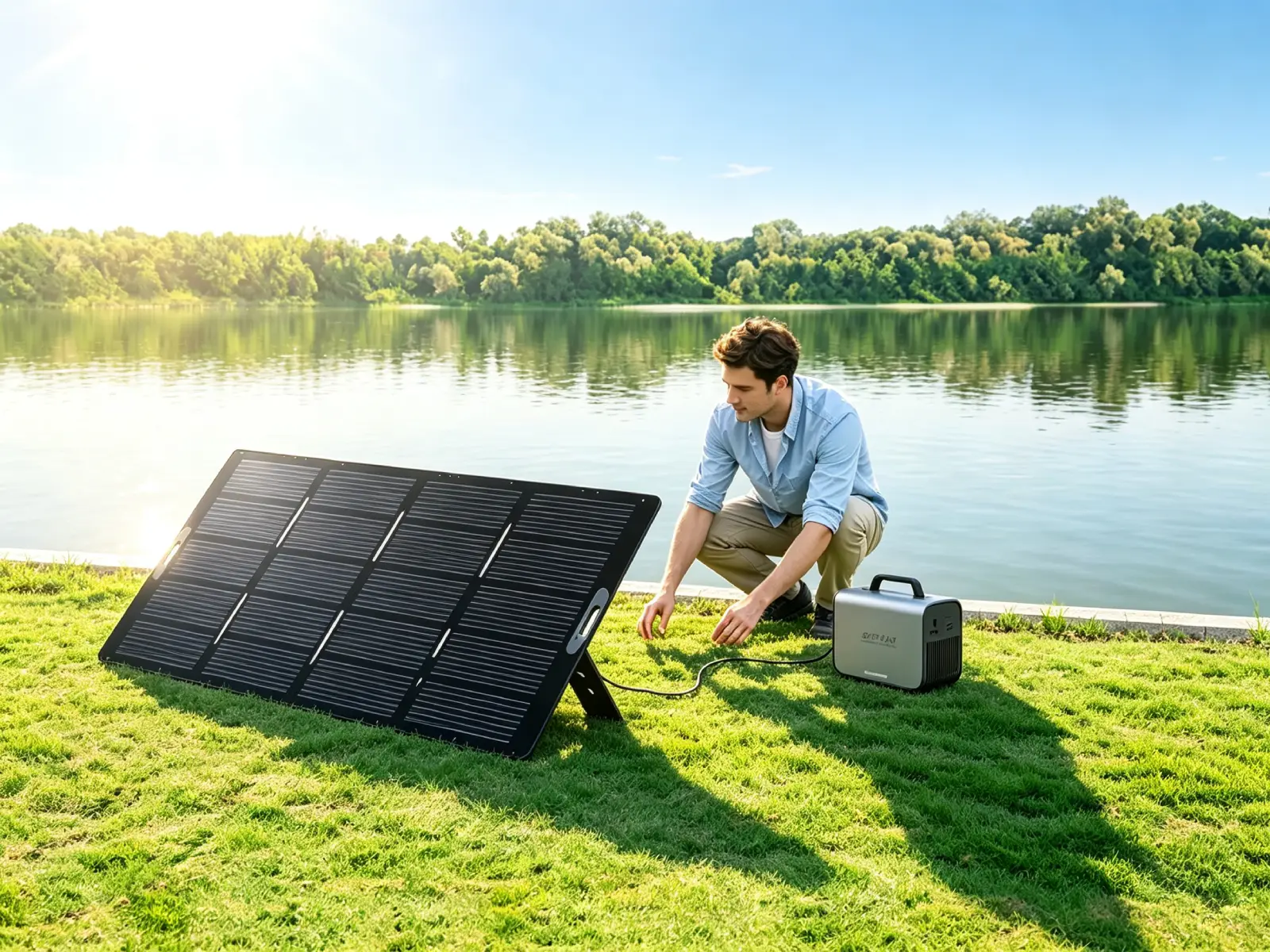
Foldable solar panels are professionally optimized for mobile off-grid scenarios. Featuring a compact foldable structure and plug-and-play design, they easily charge portable power stations, batteries, USB, and DC devices. They are widely used for outdoor camping, field operations, RV living, and emergency power supply.
3.4 Perovskite & Tandem Solar Cells (Next-Generation R&D)
Perovskite solar cells and silicon-tandem cells are forward-looking future solar technologies still in continuous iteration. These innovations break the efficiency bottleneck of traditional silicon-based panels and will dominate the global solar industry in the next 5–10 years.
4. Common Applications of Future Solar Panels
Future solar panels greatly expand the application boundary of photovoltaic power generation, adapting to diverse scenarios that traditional solar panels cannot cover:
-
RV and mobile caravan power systems
-
Marine and yacht off-grid power supply
-
Residential balcony small-scale solar systems
-
Off-grid power for remote cabins and villas
-
Solar power for outdoor security cameras and monitoring devices
-
Commercial distributed PV and mobile energy projects
5. Why Future Solar Panels Are the 2026 Renewable Energy Trend
Global renewable energy demand is shifting from large centralized power stations to decentralized, flexible, and mobile power systems. Future solar panels perfectly match this industry transformation with three core strengths:
Diversified application scenarios: Free from flat rooftop limitations, adaptable to almost all outdoor and mobile power scenarios.
Higher power generation efficiency: Upgraded cell technology boosts power output per unit area, saving installation space and improving energy utilization.
Lower long-term costs: Premium weather-resistant materials and stable performance reduce equipment replacement and maintenance costs for global projects.
6. How to Choose the Right Future Solar Panel for Your Project
Each type of future solar panel serves specific project demands. Follow this targeted selection guide:
-
Choose rigid solar panels: Ideal for fixed long-term installations like home rooftops and commercial PV projects, prioritizing stability and long service life.
-
Choose flexible solar panels: Best for curved surfaces, weight-limited equipment, and narrow installation spaces.
-
Choose foldable solar panels: Perfect for outdoor activities, field work, and temporary off-grid power needs requiring portability.
7. Custom Future Solar Solutions from Gaotu Innovation
Gaotu Innovation is a professional manufacturer dedicated to next-generation photovoltaic technologies. We supply a full range of future solar products, including high-efficiency rigid solar panels, lightweight flexible solar panels, and foldable portable solar modules.
We support full OEM/ODM customization for wattage, dimensions, connectors, surface materials, private branding, and packaging. All products pass international safety certifications with strict quality control and comprehensive after-sales service, serving global solar distributors, energy brands, and off-grid project developers with reliable factory-direct solutions.
8. FAQs About Future Solar Panels
Q1: Are future solar panels better than traditional solar panels?
Yes. Future solar panels feature higher conversion efficiency, lighter weight, and stronger scenario adaptability. They support curved, mobile, and off-grid installations that traditional rigid panels cannot achieve, delivering overall superior comprehensive performance.
Q2: Are flexible and foldable future solar panels durable?
Absolutely. Modern future solar panels adopt upgraded UV-resistant, waterproof, and dustproof materials with IP67/IP68 industrial-grade protection. They operate stably in harsh outdoor environments and maintain a long service life.
Q3: Do future solar panels support bulk project customization?
Yes. Gaotu Innovation provides one-stop customized PV solutions for bulk orders. We customize product parameters, appearance, and packaging to meet diverse B2B project and wholesale demands worldwide.
Related Posts

Gaotu Solar Motorized Awning Wholesale | High Margin Shade Solutions for Awning Distributors
1. Pain Points of Traditional Awning Business Every awning wholesaler knows the struggles: generic products…

Best Solar‑Powered Retractable Awning for Patio & Terrace 2026
If you own a villa, backyard patio or run a small commercial outdoor space, you’ve…
How to Verify a Real Solar Panel Factory in China
Most international B2B buyers, solar project contractors, and distributors share one frustrating sourcing pain point:…


Leave a Reply