

Solar Power Knowledge
Custom Solar Panel OEM & ODM: From Requirement Confirmation to Stable Mass Production
 Gaotu Innovation
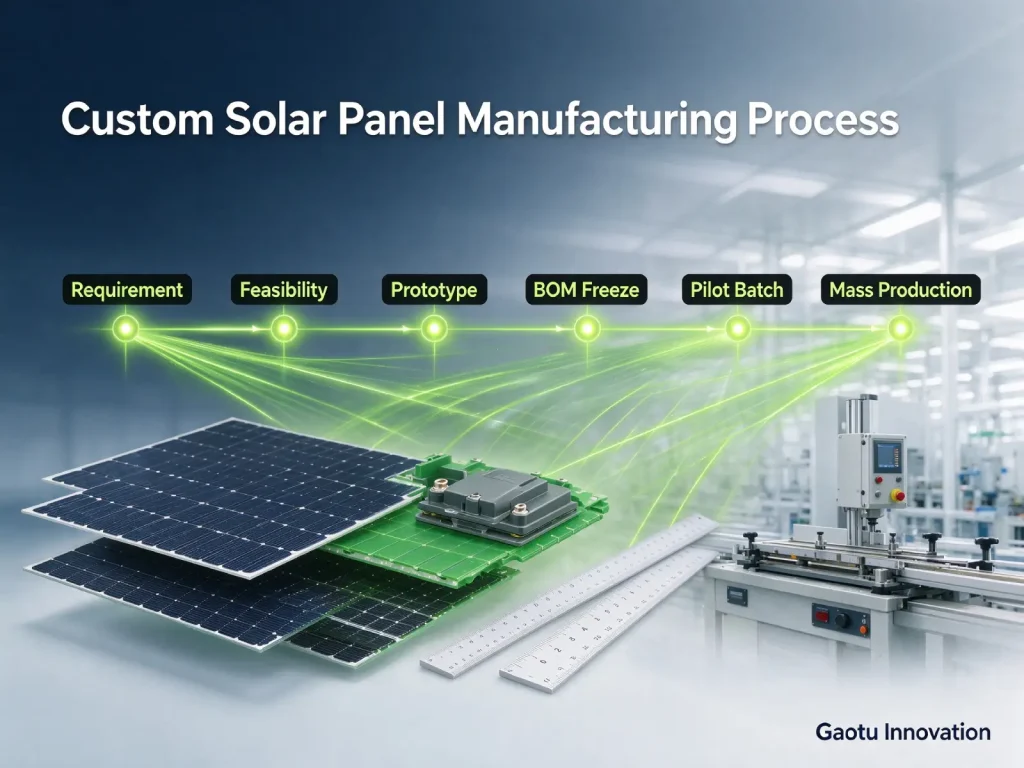
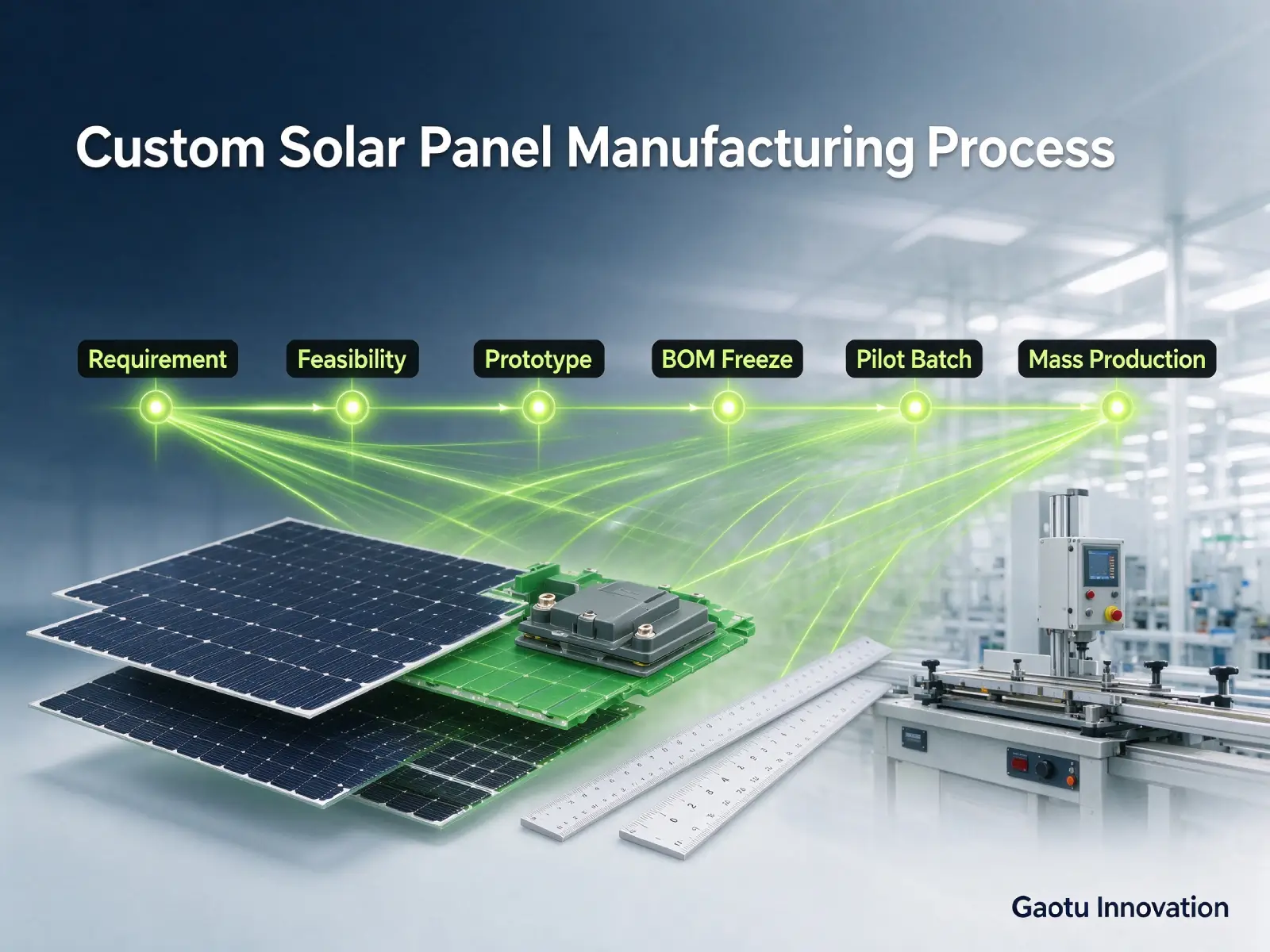
Many global B2B buyers who source custom solar panels easily fall into a misunderstanding: once a prototype sample works well, mass production will deliver the same consistent quality. In fact, reliable custom solar panel OEM and ODM manufacturing depends on clear specifications, locked BOM, strict sample verification and formal change control procedures.
Gaotu Innovation (Shenzhen) New Energy Group Co., Ltd. is a professional solar panel manufacturer based in Shenzhen, China. We focus on customized solar modules for RV, camping, marine, monitoring, off‑grid power supply, commercial project and private‑label brand clients. With mature production bases, we support full‑cycle custom development: from your initial project idea, prototype sampling all the way to stable bulk shipment worldwide. You may also visit our OEM & ODM service page to view our complete service scope.
This article introduces our real custom solar panel production workflow, common sourcing risks and RFQ checklist. It helps distributors, brand owners and engineering buyers reduce risks in custom solar projects. If you plan large‑volume module procurement, please check our wholesale solar panels page.
Article Summary
This guide explains the complete OEM & ODM custom solar panel manufacturing process of Gaotu Innovation. It covers requirement confirmation, feasibility evaluation, prototype testing, BOM freeze, pilot run and mass production quality control. You will learn common sourcing pitfalls, how to prepare your RFQ, and the difference between standard solar panels and fully customized modules for your B2B solar project. For more practical procurement tips, read our B2B buyer checklist article.
Quick Answers
- ✅ We can customize solar panel size, wattage, voltage, junction box, logo and packaging.
- ✅ An approved sample does not guarantee mass‑production consistency; locked BOM and drawings are required.
- ✅ OEM means you provide full design; ODM means we design based on your performance targets.
- ✅ A pilot batch is strongly recommended before releasing large‑volume orders.
- ✅ Send a full RFQ with application, size, electrical specs and certification needs for accurate quotation. Reach our team via contact page.
Custom Solar Panel Manufacturing Workflow Overview
Every formal custom solar panel project follows six core stages. Each stage outputs formal documents to eliminate information gaps between buyers and the factory.
| Stage | Core Question | Deliverable Output |
|---|---|---|
| Requirement Definition | What performance, size and application does your solar panel need? | Controlled requirement specification document |
| Feasibility Review | Can we produce it under your target specs, budget and certification rules? | Feasibility assessment report |
| Prototype Validation | Does the prototype meet electrical, mechanical and appearance standards? | Approved and tested prototype sample |
| BOM Freeze | What materials, drawings and standards will be used for mass order? | Locked BOM, engineering drawings & inspection standards |
| Pilot Batch Test | Can production lines repeat sample quality stably? | Pilot batch test report and mass production approval |
| Mass Production Consistency Control | How to keep consistent quality for repeated orders? | Batch inspection checklist & change control SOP |
Key takeaway: A qualified sample does not guarantee stable mass production. Without locked drawings, fixed BOM and unified inspection standards, quality deviation is very likely to happen in bulk goods.
Why A Passing Prototype Cannot Guarantee Consistent Bulk Quality
Many customers meet troublesome issues: samples pass all tests, but bulk solar panels come with uneven power output, dimension errors, junction box deviation, different encapsulation quality or inconsistent labeling. Most of these problems are not caused by machine failure, but insufficient process control during customization.
Common risks for custom solar panel projects:
- Dimensions, wiring positions and installation holes are only discussed verbally, without engineering drawings with tolerance marks
- Hand‑picked high‑grade solar cells and raw materials are used for prototypes but not written into official BOM
- No unified acceptance standards for power tolerance, weather resistance, insulation and aging test
- Raw material or component replacement happens without prior buyer approval
- Datasheets, nameplates and user guides do not match the final solar panel product
Before placing a large order, you need to confirm two points clearly:
- Can the factory make a qualified prototype according to your requirements?
- Can the factory reproduce exactly the same solar panel steadily for batch orders?
Step 1: Sort Out Clear Project Requirements
Before quotation and design discussion, you need to define the actual application of the solar panel. If this step is skipped, the quotation you receive often fails to match your market demand.
When sending your project to Gaotu Innovation, prepare the following information for our engineering team:
| Parameter | Business Impact |
|---|---|
| End application & target sales market | Determine required certifications (CE, FCC, RoHS, IEC etc.) and anti‑aging standards |
| Mechanical limits: max size, mounting hole layout, thickness | Define structural boundary of solar modules |
| Electrical requirements: wattage, Vmp, Voc, current, junction box & cable requirements | Decide solar cell layout and internal circuit design |
| Surface & encapsulation material requirements | Affect service life, weather resistance and unit cost |
| Branding: custom logo, nameplate, packaging and datasheet requirements | Confirm printing and marking work |
| Sample quantity, estimated annual order volume, target lead time | Confirm MOQ, sampling schedule and capacity arrangement |
✅ Deliverable of this stage: Confirmed requirement sheet signed by both buyer and Gaotu engineering team.
Step 2: Feasibility Assessment — Quotation Is Not Equal To Production Confirmation
A quotation only shows the price, it does not mean your design can be manufactured. Our engineers evaluate the project from structure, electrical performance, compliance and production capacity before formal project launch.
Four evaluation dimensions:
- Mechanical feasibility: Whether the target size, installation structure and thickness can be realized. Some special designs need material trade‑off.
- Electrical feasibility: Whether we can hit target power and voltage under STC, high temperature and weak light conditions. We will optimize cell layout accordingly.
- Compliance: Check certification requirements for your target market, confirm whether existing certificates can be reused or new testing is required.
- Mass production feasibility: Whether this custom design can be stably produced on automatic production lines instead of handmade only for samples.
✅ Deliverable of this stage: Feasibility feedback document, including achievable items, adjustment suggestions and pending confirmation items.
Step 3: Prototype & Sample Validation
The core purpose of prototyping is risk detection, not only making a display sample.
For custom solar panels, our engineers verify these key indicators:
- Overall dimension, thickness and installation size
- Actual power output under standard test condition and weak light
- Cable length, junction box position, wiring polarity
- Insulation, weather resistance and aging performance
- Logo, nameplate and appearance effect
- Compatibility with your battery, inverter or power system
All revision suggestions must be fully recorded before BOM freeze.
✅ Deliverable of this stage: Sample approval record, including all revisions, drawing version and electrical performance baseline.
Step 4: Freeze BOM, Drawings And Full Technical Documents
Once samples are approved, we lock the complete production specification to avoid random material substitution.
The frozen BOM of custom solar panels includes:
- Solar cell model, grade and cell layout
- Encapsulation film, backsheet, frame material specification
- Junction box, cable, connector part number and installation position
- Custom logo artwork, nameplate content, datasheet, packaging specification
- Full inspection criteria: power tolerance, appearance rule, aging and safety test standard
Engineering drawings must contain clear dimensional tolerance. Descriptions like “around 100W” or “approx 1000mm” can only be used in early discussion and cannot be used for mass production.
✅ Deliverable of this stage: Locked BOM, approved engineering drawings and inspection standard documents.
Step 5: Pilot Batch Production Before Large PO
We strongly recommend a pilot batch before mass production for all custom solar panel projects. Pilot production simulates formal assembly flow and exposes hidden issues that never appear on handmade prototypes.
We agree on pilot rules together with customers:
- Pilot quantity
- Judgment basis: confirmed drawings + frozen BOM
- Full test plan: flash power test, aging test, insulation and appearance inspection
- Clear pass / fail rules
- Solution for non‑conformity
- Final decision: revise design, approve mass production or suspend the project
During pilot batch, we check dimension consistency, power uniformity, frame assembly, junction box quality and packaging stability.
✅ Deliverable of this stage: Complete pilot test report and mass production release approval.
Step 6: Batch Consistency & Change Control Management
Stable OEM & ODM solar manufacturing relies on controlling all key variables and standardizing any future modification.
Key variables under strict control: Mechanical & dimension Module size, frame specification, mounting hole position, junction box and cable outlet location
Electrical performance Rated power tolerance, Vmp / Voc, wiring scheme, junction box configuration
Material & documents Solar cell grade, encapsulation material batch standard, nameplate, datasheet, serial number traceability and warranty file
If cells, raw materials, components or processes need adjustment, both sides must confirm:
- Person in charge for change approval
- Whether new prototype samples are required
- Whether recertification test is necessary
- Whether datasheets and marketing materials need update
✅ Deliverable of this stage: Batch inspection checklist and formal change control SOP for long‑term cooperation.
RFQ Checklist: Information You Need To Prepare Before Inquiry
A complete RFQ saves communication time and reduces repeated confirmation. Please prepare the items below before contacting us. You may also read our article about avoiding costly sourcing mistakes for custom solar projects for extra reference:
- End application and target export market
- Size limit, installation requirement, thickness limit
- Electrical demand: wattage, voltage, junction box and cable requirements
- Material preference for encapsulation, backsheet and frame
- Customization scope: logo, nameplate, packaging, datasheet
- Sample quantity and estimated annual order quantity
- Certification requirements
- Expected lead time
You can attach CAD drawings, reference photos, battery/inverter parameters and logo files with your inquiry. Our sales and engineering team will judge whether standard solar panels, slightly modified modules or full custom OEM/ODM are suitable for your project.
Standard Solar Panel VS Fully Custom Solar Panel
| Choose standard solar panels | Choose full OEM / ODM customization |
|---|---|
| Standard size meets your installation space | Non‑standard size or special installation structure required |
| Standard electrical parameters match your system | Need customized power, voltage or special junction box design |
| No private label requirement | Need custom logo and exclusive packaging |
| Unstable future order volume | Long‑term continuous sales plan for this product |
| Fast sampling and fast delivery | Need differentiated products to raise profit margin |
Custom solar panels bring commercial value when you have special installation space requirements or want differentiated products for your brand.
FAQ
Q1: Can Gaotu Innovation customize the size, power and junction box of solar panels?
A: Yes. The feasibility depends on available space, cell layout, material limit and certification requirement. Our engineers will finish evaluation at the early stage.
Q2: Does approved sample mean mass production will keep the same quality?
A: No. The sample only proves single‑unit feasibility. Stable bulk production needs locked BOM, formal drawings, unified inspection rules and change control.
Q3: What is the difference between OEM and ODM solar panel?
A: OEM: Buyers provide complete design and specs, we produce strictly following your drawings. ODM: You provide application and performance targets, our R&D team completes the design and optimization of structure, material and circuit.
Q4: Which documents need confirmation before mass production?
A: Normally locked BOM, engineering drawings, datasheet, nameplate, packaging specification and inspection standards.
Q5: Does sample test pass equal to valid certification?
A: No. Certification testing must use representative mass‑production samples. Handmade prototypes cannot be used for formal certification.
Final Words
A successful custom solar panel OEM/ODM project is not only making a qualified sample, but turning your demand into a controllable and repeatable manufacturing system.
Workflow recap:
- Confirm end application and sort out requirement specs
- Complete multi‑dimensional feasibility review
- Prototype performance verification
- Lock BOM, drawings and all technical files
- Pilot batch verification
- Batch consistency control and change management
- Stable mass delivery
Request Your Custom Solar Panel Project Review
Share your size limit, application, electrical specs, certification requirement and estimated order volume. Our PV engineers will give professional suggestions for your solar project. Fill in details on our contact us page to start evaluation.
Gaotu Innovation (Shenzhen) New Energy Group Co., Ltd. Phone / WhatsApp / WeChat: +86 19129358309 Email: info@gt-pow.com Address: Room 1909E, Building E, Phase II, Xinghe WORLD, Minzhi Subdistrict, Longhua District, Shenzhen, Guangdong, China Business Hours: Monday‑Saturday, 08:30‑20:30 (GMT+8) Website: https://www.gtpowsolar.com/
Related Posts
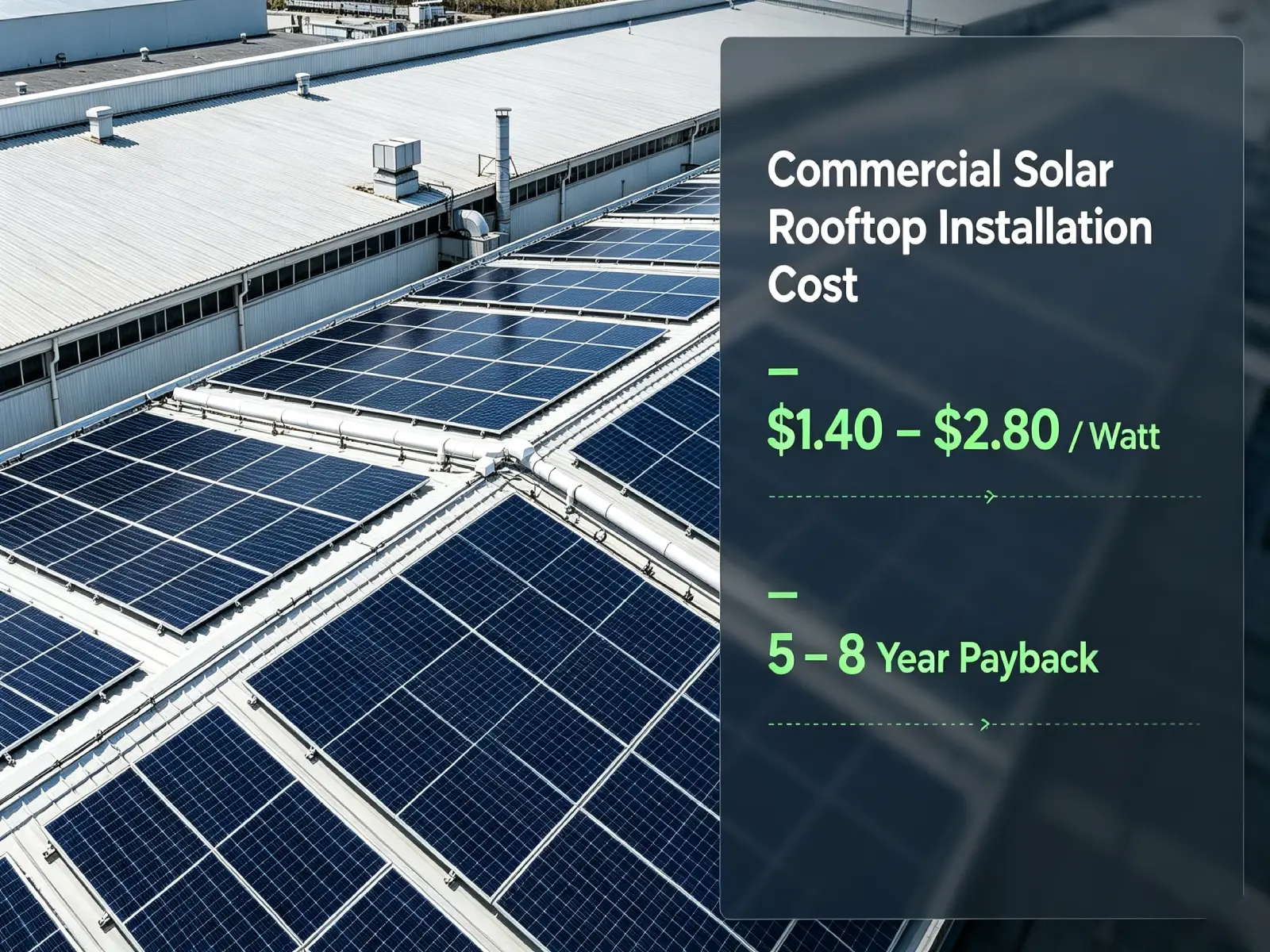
Commercial Solar Rooftop Installation Cost: A Complete Guide for Business Owners
Summary: Written for factory, warehouse and office building owners, this guide breaks down the cost…

Solar Panel Wholesale Supplier Guide: How to Source Bulk Supply Direct from a Factory
If you are looking for a solar panel wholesale supplier and want to cut out…
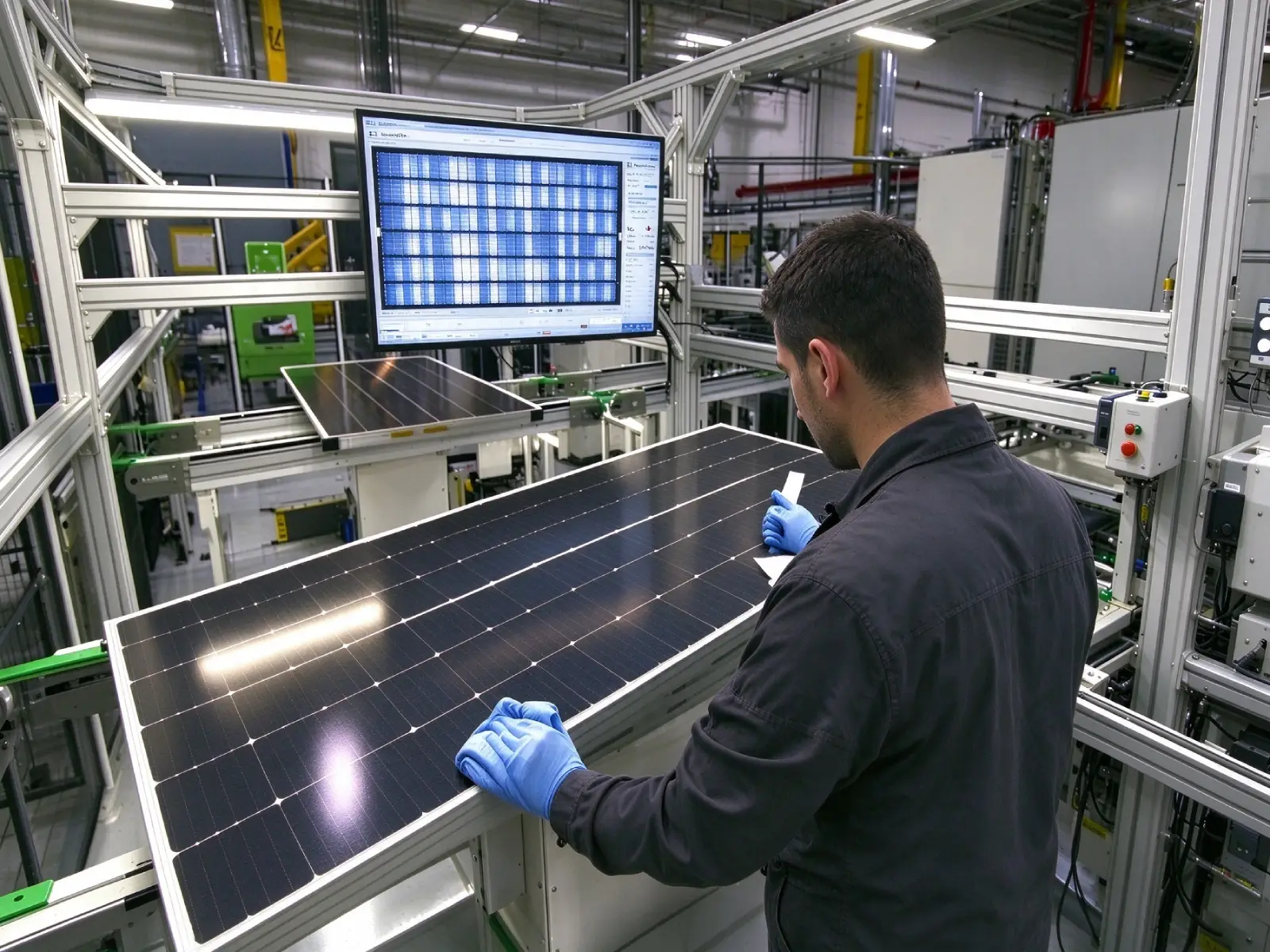
Solar Panel Wholesale: Factory-Direct Pricing Tiers & Container Loading
Summary / Article Summary Wholesale solar panel pricing is not automatic volume discounting. This guide…
Leave a Reply